.

.
Showing posts with label Tips & Tricks. Show all posts

Sunday, September 12, 2021

Roshan Thpa

19 Mindblowing Premium-Like Free WordPress Themes

 Looking for the best premium-like free WordPress themes?

There are plenty of beautiful free themes that are just as good as paid-for premium themes. You don’t have to pay anything at all to get a powerful, good-looking theme for your site.

In this article, we will share some truly mindblowing premium-like free WordPress themes.

Mindblowing Premium-Like Free WordPress Themes

Build a Premium-Like Website with Free WordPress Themes

WordPress is the most popular website builder on the market, and it’s free. There are 2 types of WordPress: WordPress.com, which is a hosted solution, and WordPress.org, which is a self-hosted platform.

Take a look at our complete guide on WordPress.com vs WordPress.org for more details.

You need to use WordPress.org, which is free. It has all the flexibility you need, and lets you add themes and plugins to your website.

Before you start, you will also need to purchase a domain name and web hosting. A domain name is your site’s address on the web, like wpbeginner.comWeb hosting is where all your website files are stored.

We recommend using Bluehost. They are one of the most popular web hosting providers and an official WordPress hosting partner.

For WPBeginner users, Bluehost offers a free domain name, free SSL certificate, and a huge discount on web hosting. That means you can get started so cheaply that it’s almost as good as free.

The Bluehost special offer for WPBeginner readers

After signing up for hosting, check out our complete step by step guide on how to make a website.

Now, let’s look at some of the mindblowing premium-like free WordPress themes you can use.

1. Astra

Astra

Astra is a lightweight free WordPress theme built for any type of website or online store. It has an elegant layout with WooCommerce compatibility straight out of the box.

It integrates with popular page builders like Beaver Builder to customize your website. Astra is translation ready and fully supports RTL languages. It’s also SEO friendly.

The lite version of Astra is completely free, but you can also upgrade to the paid version. This is one of the best premium WordPress themes out there, offering a great user experience with lots of easy to customize theme options.

2. OceanWP

OceanWP

OceanWP is one of the best free WordPress themes on the market. It’s highly flexible and offers multiple free demo sites that you can easily customize to create your website.

It has built-in SEO optimization to help your website rank well in Google and other search engines. The theme has multiple post formats and is fully customizable using drag and drop page builders and the live WordPress customizer. You don’t need to know any CSS code to change how your site looks.

3. Hestia
Hestia

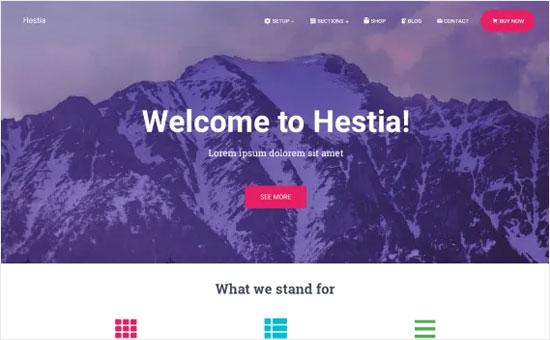
Hestia is a stylish and user-friendly one-page WordPress theme. It’s designed to let you create a WordPress blog or any type of WordPress site in just a few clicks.

It has a custom header background on top of which you can add a logo, navigation menu, welcome text, and call-to-action button. Other features include a photo gallery, image slider, and WPML compatibility.

Hestia users responsive design and is retina ready, meaning your site will look great on all mobile devices. You can easily add plugins, such as a contact form plugin or slideshow plugin.

4. Hueman

Hueman

Hueman is a highly customizable free WordPress theme. It comes with different layout choices, a custom options panel, social menus, unlimited color choices, and more.

It has a magazine-style homepage with multiple columns and sidebars, making it suitable for blogging. The theme is easy to set up using the WordPress customizer.

5. Sydney

Sydney

Sydney is a stunningly beautiful WordPress theme. It has a professional-looking fullscreen background image that you can customize using the Elementor page builder.

Inside, you will find color choices, layout control, Google Fonts, and more. And the homepage offers an image slider, header image, and a sticky navigation menu.

6. Neve

Neve

Neve is a WordPress premium-like free theme with a modern design. It comes with dozens of starter sites to help you get started quickly and easily.

Neve offers elegant blog layouts, as well as layouts for small business sites, and eCommerce stores. With a minimalist design, this theme is a great choice for bloggers, startups, or any WordPress site.

Even better, Neve has a responsive layout. That means it will look great on mobile devices.

7. Vantage

Vantage

Vantage is a fully responsive WordPress theme and WooCommerce theme. It’s highly customizable and you can use it for business, corporate, and personal sites. It’s also a good choice for freelancers.

The theme supports third-party WordPress plugins to add more features and functionality to your website. It has WooCommerce integration to start an online store. Plus, it includes social icons in the top navigation.

8. Spacious

Spacious

Spacious is an elegant looking WordPress theme that works well for business websites. It comes with multiple sidebars, page templates, and easy customization options.

Other key theme features include custom widgets, an image slider, multiple options for your blog page, and light and dark layouts. Spacious is a great theme for beginners, with an easy setup process. It only takes a few minutes to launch your website.

9. Customizr

Customizr

Customizr is a feature-rich blog theme or website theme for WordPress. It comes with a featured image slider, custom logo, multiple page layouts, and color options.

With an attractive homepage design, Customizr helps you engage users and get more traffic. You can use the custom settings in the WordPress editor to make changes to your website easily.

10. Quill

Quill

Quill is a free WordPress theme aimed at legal firms. It comes with homepage sections where you can add information about past cases and client testimonials.

It lets you create a custom homepage layout using page builders to alter the page design. It also supports the block editor (Gutenberg editor) and provides custom blocks for your front page.

11. Moesia

Moesia

Moesia is a sophisticated free WordPress theme with parallax support. It comes with 11 ready-to-use blocks that you can use to build a professional business website even on a bootstrap budget.

Moesia offers a custom header where you can display an image with fullscreen width. You can add welcome text with a call-to-action button on top of this.

12. Enigma
Enigma

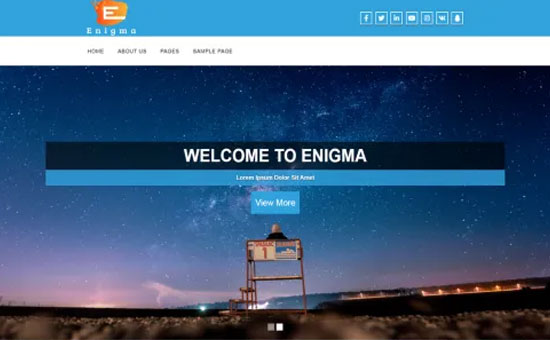
Enigma is a beautiful WordPress theme suitable for any kind of website. It supports a featured slider on the homepage and comes with multiple sidebars and layout options.

Other notable features include homepage sections for your portfolio, services, and testimonials. Enigma supports WPML to create a multilingual website.

13. Modern

Modern

Modern features a fresh WordPress style with a full-width slider, bold colors, and beautiful styles. It has a beautiful grid layout where blocks are perfectly aligned for all screen sizes and devices.

It has a fully customizable dark layout and gives you full control of colors. The theme has built-in speed and performance optimization.

14. Phlox

Phlox

Phlox is a creative WordPress free theme. It has a premium-like layout built specifically for artists, photographers, and creative professionals.

With Phlox, you get full WooCommerce support, making it easier for you to create an online shop and sell products. Inside, you will also find custom widgets and elements to set up your website quickly.

15. Make

Make

Make is a stunning WordPress free theme for small business websites and personal blogs. It lets you easily create a website using the built-in drag and drop page builder.

It has full-width banners, multi-column sections, image galleries, and more. The theme is compatible with popular WordPress plugins to extend the functionality of your website.

16. Poseidon

Poseidon

Poseidon is a premium-like free WordPress multipurpose theme. It has a magazine-style homepage layout and a full-width image slider. It features beautiful typography with a spacious white background that makes your content pop out.

With social media integration, you can increase your following and get more customers. Poseidon also comes with custom widgets for your sidebar and footer.

17. Courage

Courage

Courage is an excellent WordPress free magazine theme or newspaper theme with an eye-catching frontend. It has a lot of flexibility and lets you showcase your content prominently.

Courage offers multiple featured columns, content widget areas, and homepage sections for content-focused websites. It also provides a custom background, color choices, and header layouts.

18. Gateway

Gateway

Gateway is a classic WordPress free business theme. It features a large background image with a call-to-action button on the homepage.

It’s elegantly designed to be a multipurpose WordPress theme suitable for any professional website. It has easy customization options and can be ready in just a few clicks.

19. Zakra

Zakra

Zakra is an elegant WordPress premium-like free theme. It comes with multiple ready-made demo sites with different color schemes. Importing and customizing these lets you start your site quickly.

With a fullscreen layout, Zakra gives you a custom header image and call-to-action button to redirect users to your landing page. It works with popular page builders and is easy to manage using WordPress customizer.

We hope this article helped you choose the best premium-like free WordPress theme for your website. You may also want to take a look at our guide on selecting the perfect theme for WordPress.
Read More

Tuesday, September 7, 2021

Roshan Thpa

Cybersecurity and New Technologies

 The cybersecurity landscape is evolving.

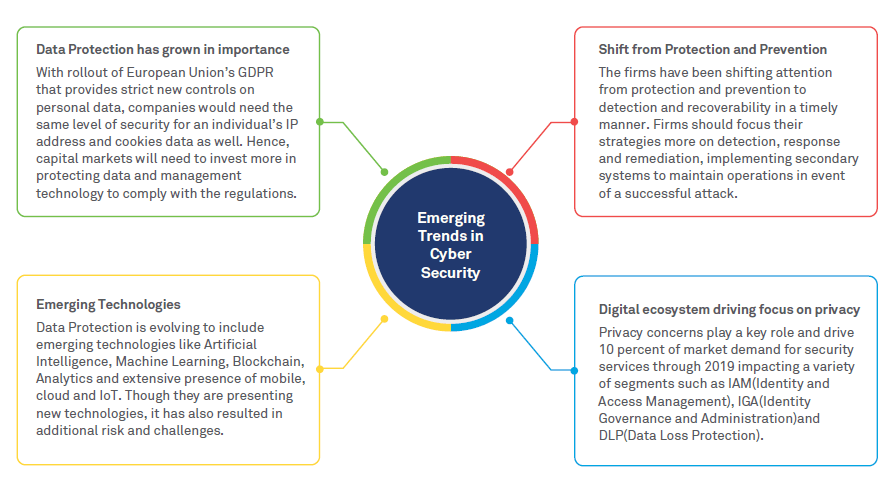
Thanks to new advances in technology, the future is looking bright for the industry. Artificial intelligencemachine learning, IoT, blockchain, 5G - these advancements will be part of what lies ahead. However, all this sophisticated new tech has a dark side: both sides can use it. Now, the struggle between cybersecurity and cybercrime has become even more complicated.

A new breach or zero-day attack targeting brands and government agencies seem to be happening each month. There have been several high-profile attacks this year alone. WhatsApp, NordVPN, the U.S. Customs, and Border Protection, and a slew of others have suffered breaches.

Cybersecurity and New Technologies

Here are seven emerging technologies that would make these attacks look elementary.

Compromised Artificial Intelligence

The applications for AI in government, business, and healthcare are limitless. For instance, AI can use crime statistics and criminal records data to create more accurate prediction tools that may decrease crime. Artificial intelligence can also help speed up the research and development of new, life-saving drugs.

In the wrong hands, however, AI can become a severe threat. Hackers are already using the technology to circumvent and outsmart cybersecurity defenses. Cybercriminals can use AI-powered programs to scan networks and reveal their vulnerabilities. AI-predictive text can impersonate high-value individuals and dupe targets into divulging private information.

Attackers Abuse the Cloud and Exploit Encryption

Hackers are already using encryption and sandboxing to hide in plain sight, and they're getting better at it. Encryption is a great tool to protect regular traffic, but it can also inadvertently conceal bad traffic from detection. Cybercriminals use popular cloud services to hide, control, and distribute malware. This technique is challenging to catch using traditional security tools because it looks like regular traffic.

Self-propagating Malware

In the old days, it took two to do the malware tango. The first dancer was the corrupted link, file, or program, while the other was the user. The user had to open an attachment, download a file, or do some other action before the malware could spread. Today, there are newer forms of hybrid malware, and all are scary.

Take ransomware crypto worms, for instance. These buggers are network-based and don't need human intervention to spread. Malware that self-propagates is tougher to catch and can spread at the speed of the network they're in. Security experts agree that self-propagating malware can potentially take down the internet.

Exploiting Vulnerabilities in 5G

As carriers start pushing 5G as the faster, next-gen wireless network with more bandwidth, hackers can use the transition to attack. The targets would be 5G devices and systems using the web, and the most likely method would be a DDoS attack. The increased speed and bandwidth means more data can flood the servers with traffic, shutting them down.

Financial and Security Scams Using Deepfake Technology

You've probably seen "deep fakes" of Tom Cruise and Donald Trump in action on YouTube. Deepfake technology lets people manipulate audio and video in a very realistic way. Face-swapping filters on Snapchat and Instagram are basic versions of this technology. Sophisticated and well-made deep fakes are tough to spot, you'll have a hard time distinguishing it from the real thing.

It's this level of sophistication that is worrisome. Sure, the creators of celebrity deepfakes do it for kicks and to show off the capabilities of the tech. However, many cybersecurity experts warn that hackers could use the technology for fraud and phishing scams. Cybercriminals can pose as someone else to trick people into handing over money or sensitive information.

The only course of action is to fight fire with fire or AI with AI. Several companies are developing AI-powered software that can detect deep fakes, but the process will take a while.

Cybercriminals use the "Internet of Things" as a New Attack Vector

The Internet of Things (IoT) has become part of the lives of countless people over the years. The best example of the technology in use is a smart home network. Home devices and appliances can communicate with each other via the internet. Homeowners can also control devices remotely, such as turning a light on and off or viewing an IP camera. IoT technology is also used in all types of businesses.

As useful as IoT has been, the technology carries with it several security flaws:

  • Individuals or teams that deploy IoT devices leave them unmonitored.
  • Many IoT devices create "back doors" into other systems, leaving them vulnerable to attack.
  • IoT vendors have historically done a poor job of patching their devices to address known security issues.
  • Most IoT endpoints have no security capabilities.

Hackers are getting better and evolving at a faster rate because they have more tools at their disposal.

Quantum Computers Capable of Cracking Encrypted Data

Quantum computing has always been theoretical, but Google had other plans. The search giant announced in September that they built a functioning quantum computer. Even if the technology has no practical applications yet, everyone must take precautions from here on out.

The development of a working quantum computer is a wonderful computer engineering achievement. However, it can spell the apocalypse for the encryption world. Anybody who can get his or her hands on one can hack into practically anything using the power of quantum physics. All this computing power can break the encryption protocols used in passwords, credit card transactions, and even blockchain.


Conclusion

It has always been a high-stakes chess match between security experts and cybercriminals. Although the emergence of new technologies is great for the industry as a whole, it also poses a threat to everyone. AI-assisted hackers can break into criminal records databases to extort people with prior records to pay a ransom. Quantum computers in the wrong hands can easily break encrypted transactions. Network-based malware can shut down the entire internet.

Read More
Roshan Thpa

10 Best Cyber Security Certifications To Boost Your Career

 Cyber Security Certification is a must to become a cybersecurity specialist.

There is an unprecedented amount of data that is being generated, stored, and processed all the time by the scientific, corporate, government, military, financial, and medical organizations, a significant of which is very sensitive and requires continuous protection. Cybersecurity concerns with the technologies and practices implemented to protect this virtual world. It is the practice of securing systems, networks, and programs from digital threats, damage, and unauthorized access. It also refers to the protection of information technology. For adequate protection against cyber-attacks, every organization needs to account for each of the following elements:

  • Application Security
  • Business Continuity
  • Cloud Security
  • Data Security
  • Database and Infrastructure Security
  • Disaster Recovery
  • End-User Education
  • End Point Security
  • Identity Management
  • Mobile Security
  • Network Security

Cyber Security Job Profile

The main job of a cybersecurity professional is the protection of data. The job responsibilities of cybersecurity professionals are very complicated and span across all organizations. Before you look for cybersecurity certification, you need to look into the different career options. These are but not limited to:

  • Security Specialist
  • Security Administrator
  • Security Architect
  • Security Analyst
  • Security Auditor
  • Security Director
  • Security Consultant
  • Security Engineer
  • Cryptographer
  • Chief Information Security Officer
  • Vulnerability Assessor
  • Incident Responder
  • Forensic Expert
  • Penetration Tester
  • Source Code Auditor
  • Security Manager
  • Cryptanalyst
  • Best Cyber Security Certification

Most of the Cyber Security jobs require a four year Bachelor’s Degree in Computer Science or Information Technology. It generally covers a foundation in Programming, Database, and Statistics with an insight into Artificial Intelligence, Cryptography, and Ethical Hacking.

A Master’s Degree takes an additional one to two years after the Bachelor’s Degree. It provides advanced instruction in protecting computer networks and infrastructures from threats. You learn about ethics, policies, and procedures of cybersecurity and how to carry out security measures and defense techniques. It prepares students to be sophisticated practitioners and enables them to investigate critical technologies such as digital forensics, biometry, and cryptography.

Best Cyber Security Certifications

There are many numbers of online and traditional on-campus programs for cyber security certifications. Most of them focus on network and data protection at different levels. Each certification prepares an aspirant for a specific purpose. Such courses explore cryptographic techniques, computer security, digital forensics, and designs for network perimeter defenses. Let us look into the different cyber security certifications worth considering. Before choosing a cyber security certification, it is essential to make sure that the course is accredited and aligns with the targeted career goal.

1. CEH: Certified Ethical Hacker

CEH: Certified Ethical Hacker

This certification teaches you how to think and act like a hacker. Topics in this certification cover hacking technologies, the latest vulnerabilities, information security laws, and standards. Students are put through real-time scenarios, exposed to hacking techniques, and finally taught how to scan hack and protect their system from the same. This course benefits security professionals, site administrators, and anyone concerned with network security. This certification gives you an edge towards penetration testing jobs.

You can signup here

2. CISM (Certified Information Security Manager)

CISM (Certified Information Security Manager)

It is a top credential for IT professionals in enterprise-level applications for developing the best organizational security practices. An aspirant here needs five years of proven cybersecurity experience. However, a combination of education and experience may also be substituted for this requirement. The CISM is valid for three years, and credential holders need to pay an annual maintenance fee. Credential holders of this certification possess advanced skills in

  • Security Risk Management
  • Program Development and Management
  • Governance
  • Incident Management and Response.

You can signup here.

3. CompTIA Security+

CompTIA Security+ Certification

It is a general level certification for those who are new to cyber technology. It requires two years to complete it. It covers the following IT concepts:

  • Network threats and defense techniques
  • Effective security policies
  • Network and Host-based security practices
  • Disaster Recovery
  • Encryption Standards and Products

You can signup here.

4. CISSP (Certified Information Systems Security Professional)

CISSP (Certified Information Systems Security Professional)

Many IT organizations consider this certification as an essential requirement for network security. It is a vendor-independent certification and can be applied to a wide variety of set-ups. This certification requires prior experience of 3 – 5 years, and once completed, it is one of the best knowledge assets you can have. This course covers the following domains:

  • Access Control
  • Cryptography
  • Telecommunications
  • Networking

You can signup here.

5. GSEC: GIAC Security Essentials

Cyber Security Certification: GSEC

This certification requires five years of relevant work experience. It is an entry-level certification designed for professionals who aspire to occupy ‘hands-on’ security roles. GSEC certified professionals possess technical skills in identifying and preventing wireless attacks, access controls, authentication, password management, DNS, cryptography fundamentals, ICMP, IPv6, critical public infrastructure, Linux, Network Mapping, and Network Protocols. This certification needs to be renewed every four years along with a payment of certification maintenance fee, also every four years. It is more of management focused certification, and it covers the following domains:

  • Information Security Program Development and Management
  • Information Security Management
  • Information Security Incident Management
  • Information Risk Management and Compliance

You can signup here.

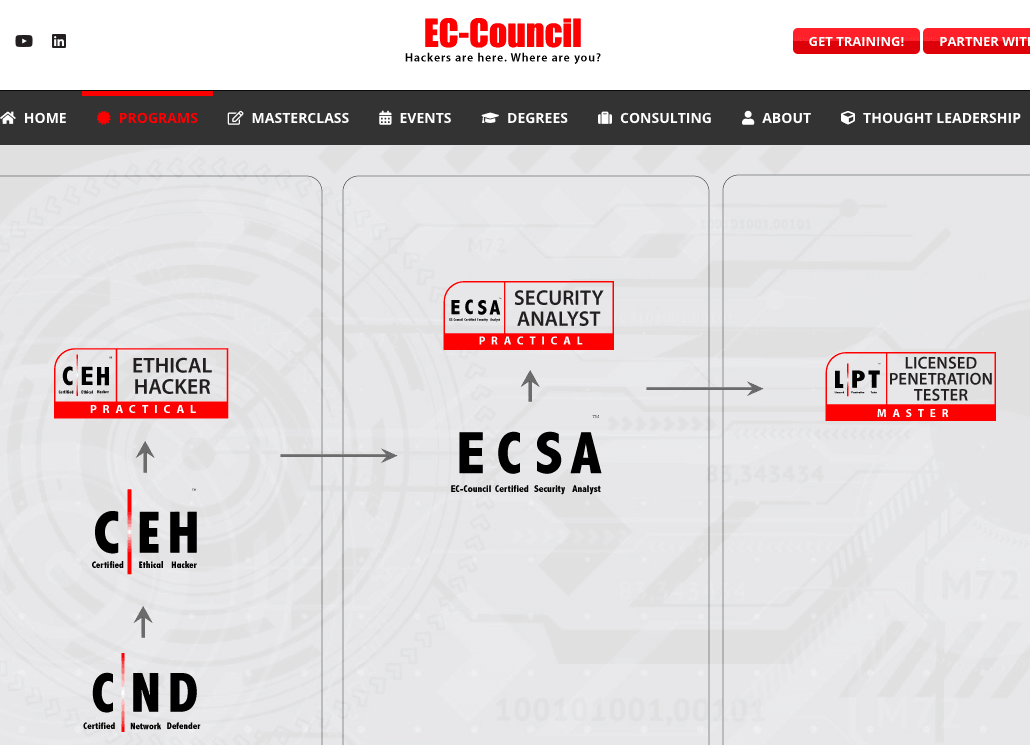
6. ECSA: EC-Council Certified Security Analyst

EC-Council Certified Security Analyst (ECSA): Penetration Testing

This certification is similar to the CEH certification. This certification gives you an understanding of hacking tools and the latest technologies. This certification is suitable for Network Server Administrator, Information Security Tester, Firewall Administrator, System Administrator, Risk Assessment Professional, and more.

You can signup here.

7. GPEN: GIAC Penetration Tester

Penetration Testing

It is a certification for personnel whose job duties involve assessing target networks and find security vulnerabilities. The topic areas for this certification are:

  • Password Formats and Hashes, Advanced Password Attacks, Attacking Password Hashes
  • Exploitation Fundamentals, Escalation and Exploitation, Domain Escalation and Persistence Attacks
  • Kerberos Attacks, Metasploit, Moving Files with Exploits
  • Penetration Test Planning
  • Penetration Testing with PowerShell and the Windows Command Line
  • Scanning and Host Discovery, Vulnerability Scanning
  • Web Application Injection Attacks
  • Web Application Reconnaissance

You can signup here.

8. SSCP: Systems Security Certified Practitioner

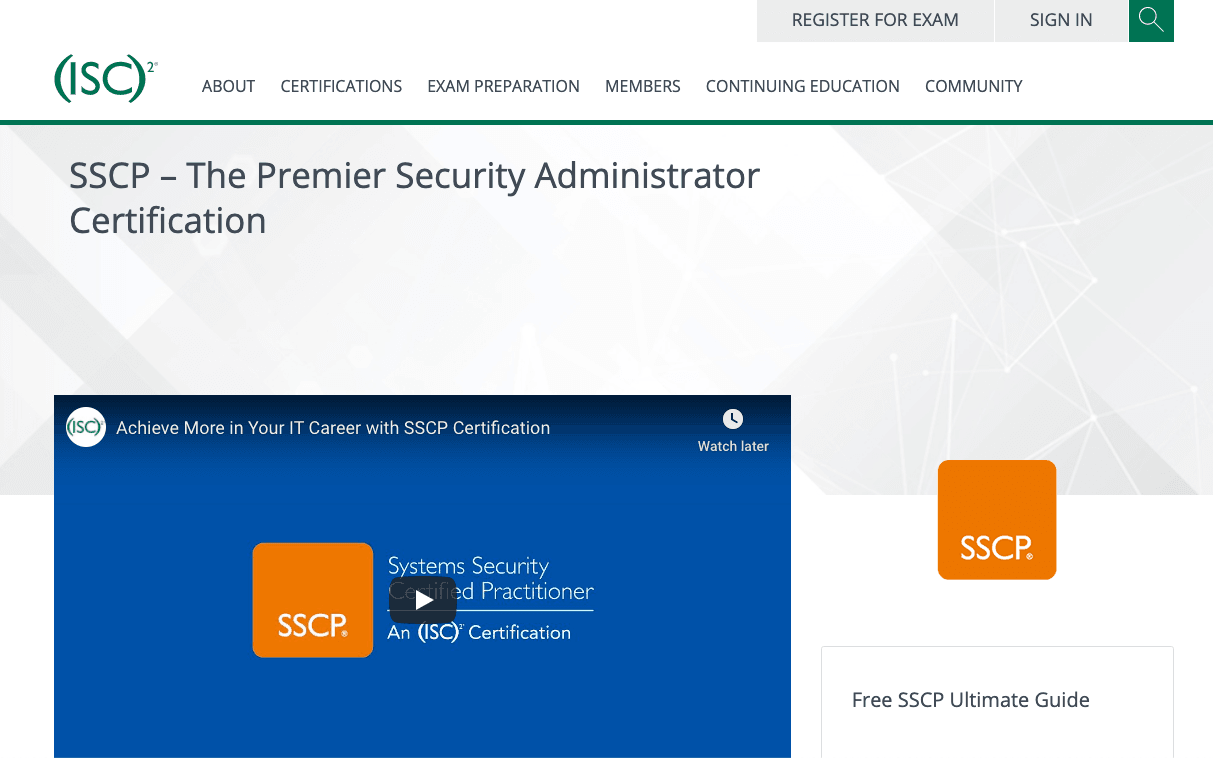
SSCP – The Premier Security Administrator CertificationThis certification ensures that you have acquired the advanced technical skills to implement, monitor, and administer IT infrastructure using best security practices, procedures, and policies established by the cybersecurity experts. This certification is ideal for IT administrators, managers, directors, and network security professionals, including those holding the following job positions:
  • Network Security Engineer
  • Systems Administrator
  • Security Analyst
  • Systems Engineer
  • Security Consultant/Specialist
  • Security Administrator
  • Systems/Network Analyst
  • Database Administrator

You can signup here.

9. CRISC: Certified in Risk and Information System Control

CRISC: Certified in Risk and Information System ControlIt is an enterprise risk management qualification for professionals looking forward to extending their knowledge and experience of IT, Business Risk, identification, and implementation of Business Systems Control. CRISC is one of the first certifications which help to prepare IT professionals for real-world threats. It adds a higher value to employers and clients in risk assessment and management, fosters continuous knowledge, and up to date information. CRISC certification is targeted towards professionals whose job responsibilities include the following roles:
  • IT Professionals
  • Risk Professionals
  • Control Professionals
  • Business Analysts
  • Project Managers
  • Compliance Professionals

You can signup here.

10. CISA: Certified Information Systems Auditor

CISA: Certified Information Systems AuditorThis certification focuses on Information Auditing. CISA certified professionals have good audit experience and can manage vulnerabilities. It, too, requires five years of prior experience. Students gain expertise in the following domains:

  • Information Systems Auditing
  • IT Management and Governance
  • Protection of Information Assets

You can signup here.

Bonus Cybersecurity Certification

11. CCSP: Certified Cloud Security Professional

Traditional IT security protocols do not work in a cloud environment. This certification gives IT professionals a deep understanding of cloud architecture, its design, operations, and services. It needs five years of prior experience. This certification covers the following domains:

  • Concepts of Cloud Architecture and Design
  • Cloud Data and Security
  • Platform and Infrastructure Security
  • Cloud Operations
  • Legal and Compliance

You can signup here.

12. CHFI: Computer Hacking Forensic Investigator

This is an advanced cybersecurity certification for forensic network security investigators. It enables you to gather the necessary evidence and prosecute offenders in a court of law. The hacking forensic investigator is responsible for analyzing attacks, extricating information, report hacking crimes, and conduct audits to prevent future crimes. This certification covers:

  • Incident Response and Forensics
  • Recovering deleted, encrypted or damaged file information
  • Technical Examination & Analysis
  • Reporting of Computer-based evidence.

You can signup here.

13. CCNA: Cisco Certified Network Associate Security

It is a Cisco Certified associate-level certification that goes a long way in taking forward your career in CISCO Security. This certification enables you to:

  • Recognize threats and vulnerabilities in CISCO network
  • Mitigate Security Threats
  • Develop an effective security infrastructure.

There are more programs or certifications provided by them that may coincide with your career goal.

You can signup here.

In addition to the certifications listed above, do not miss out on reviewing the various IT Security of the Training Providers and the programs offered by them.

Conclusion

Before you dive into this career, understand the very need for this service. What you are protecting and what happens if it is not protected are two very elementary instincts for this job role. There is no one exact entry point for a career in cybersecurity. Professionals can steer themselves into it from a variety of backgrounds such as Software Developers, Data Analysts, Database Administrators, Network Administrators, IT Customer Service, Web Administrators, and more. However, an understanding of technical processes is a must-have to proceed into this career path. Also, instead of starting as a fresher in this career path, you may begin as a regular IT professional and navigate your way into a cyber-security expert.

Read More